Film reaction on River Blue, Situation Analysis and Solution
FASHION INDUSTRY RED FLAGS
Mankirat Kaur
1/1/20256 min read
Source: River Blue movie by Mark Angelo
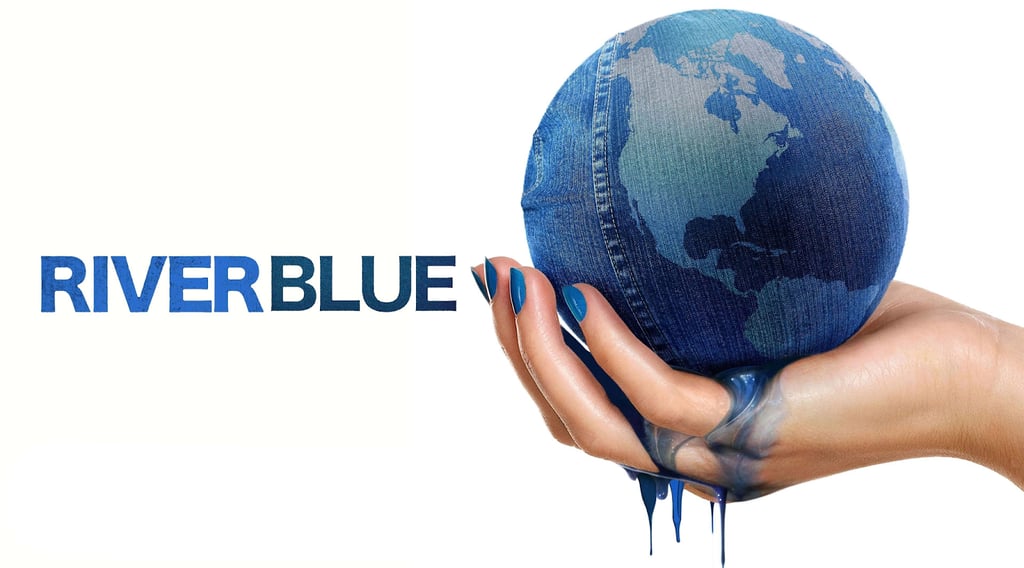
This documentary ‘Riverblue’ is a fifty-two-minute long visual piece addressing the issues, situation and reality of modern fashion industries and their detrimental effects on our environment. International river conservationist, Mark Angelo marks a journey of unfolding the hidden cost of the products showcased and sold in big fashion stores. He emphasizes the importance of aquatic reservoirs by shifting the focus on the 1% of water that is drinkable and used by humans for almost every commercial purpose including agricultural and industrial uses.
A total of four countries namely, (1) China, (2) Bangladesh, (3) India, and (4) Indonesia are thoroughly inspected to understand the cause and effect of fast fashion and water contamination in each country.
A specific city is picked out of each to narrow down the focus on areas directly affected by textile giants. For eg, Dhaka from Bangladesh, Kanpur from India and the Jeans capital of the World i.e., Xintang from China.
It is identified that the chemicals released in the water bodies of these countries are linked to the after-waste produced by factories manufacturing fashion. The clientele of these factories include companies like Nike, Addidas, Gap Inc., Levis, Zara and H&M.
Understanding the brutalities of fashion in China
Source: Jessica Liu, 2018
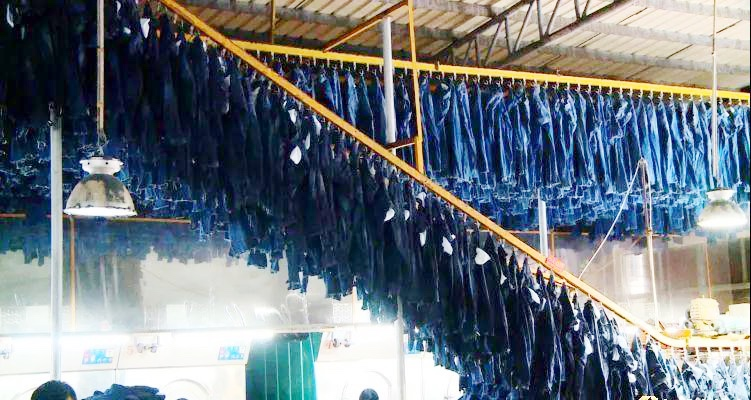
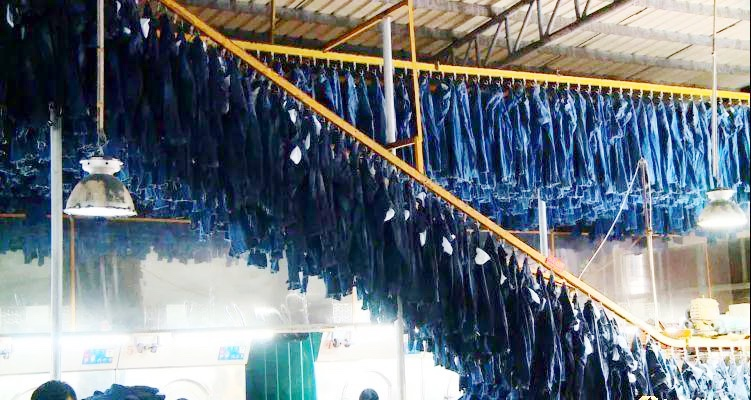
China, currently the second most populous country in the world is facing a massive health and environmental crisis inside its premises due to the rapid transition to industrialization without proper reflection on managing the after-waste of production in the factories. According to the World Watch Institute, 70% of Chinese lakes and rivers are contaminated with hazardous toxins making it extremely difficult for people to get an appropriate amount of fresh water. Activists from China have identified the fashion industry to be one of the notable culprits in perpetuating aquatic contamination.
Mark Angelo denotes the textile industry as a dirty industry that comprises the making of fashion articles like jeans that are produced in countries like China with exceptionally harmful chemicals and dyes containing materials like mercury, cadmium and lead.
There have been serious accusations on Chinese industries that the toxins and after-waste produced in these factories are directly flushed into the lakes and rivers which has polluted the water bodies. The chemicals found in these water bodies have been considered sufficient to change the cells of a fish and cause cancer in human bodies.
Strikingly, some of the chemicals banned in Europe and North America are still used by Chinese industries. Moreover, these chemicals are ‘non-dissolving’ which means that they can travel long distances and could be found in the stomach of a Polar Bear living on Canadian land. In response to this, activists have tried to find who are the people behind buying all these products and surprisingly it has been found that some of the famous brands like Zara, H&M, Nike and Addidas are the key players working with these factories to sell their branded products in the western market at cheap prices.
The case of Indian fashion industry
Source: wildfilmsindia.com
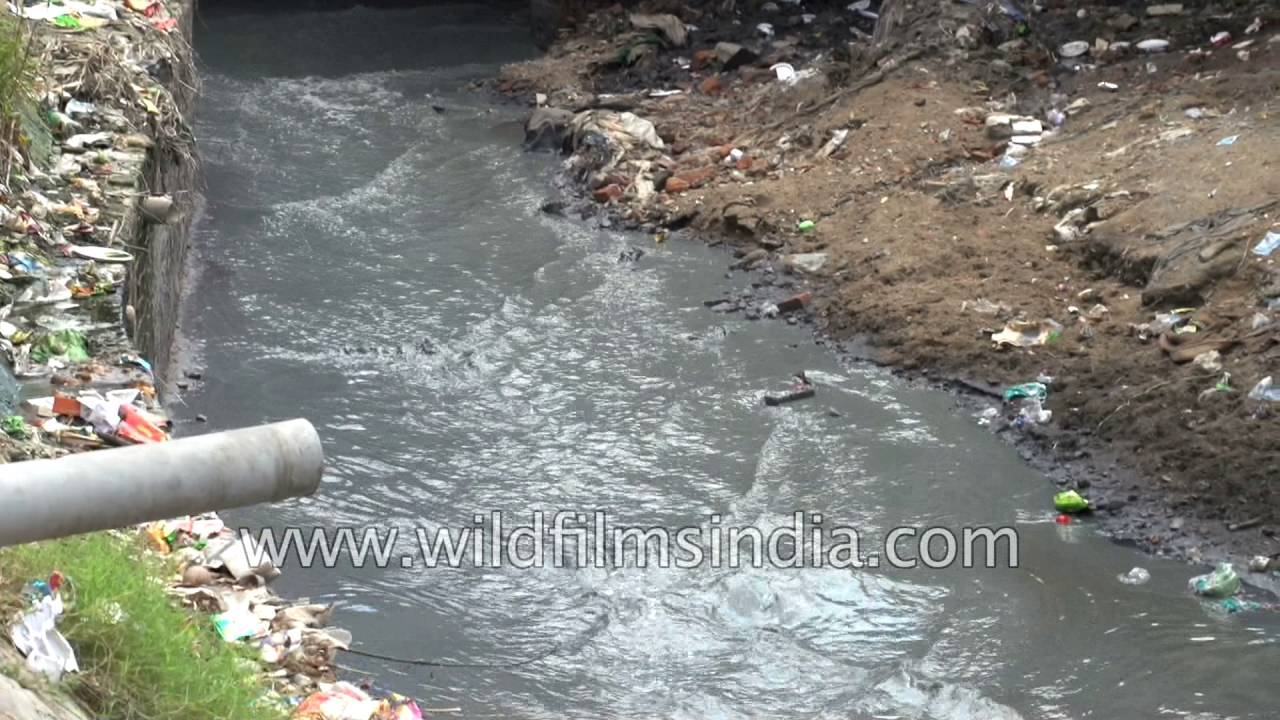
In India rivers are considered, ‘the most sacred asset’ but there is a contrasting difference in reality and perspective of the people. The documentary talks about a tannery situated near the banks of the Ganges River holding the major economy of Kanpur city together with the tag of being a ‘major polluter.’ Currently, there are 400 hundred tanneries in Kanpur that use heavy and harmful chemicals like various acids, dyes, chrome sulphate, and metals generating a harmful liquid waste flowing in the streams and ponds of the area. This polluted water is further used in irrigation due to which harmful chemicals like chromium have been found in the food and cattle milk of this land.
There is another school of perspective where Zaffar Lahiri, an owner of a midsized tannery in Kanpur denies inculcation of any harmful chemicals from his tannery in the Ganges and quotes it to be “impossible” for a factory situated 3 km away from the Ganges without a strong scientific basis of argument.
An Indian fisherman recorded in the documentary getting hundreds of fish on the surface of the river is connected to a chemical spill that happened on the very morning of the day this movie was recorded. This affirms that the water bodies of our world have been constantly abused as per the saying of Mark Angelo and it is a huge challenge for Indian people in future to revive a river like the Ganges.
Possible improvements and inferences


Source: Unsplash
As a professional particularly belonging to the fashion design stream, I cannot give a potential model of improvement for reviving rivers of these big lands but my approach to textile industries could be significant in eradicating the source of this pollution. First and foremost, the industries can implement a circular economy model with this the usage of new raw materials can be cut. Further, the used products in good condition can be reused and sold by the tag of second-hand clothing at cheap prices. More investment in machinery for recycling rather than producing the clothes can be done, especially for manufacturing jeans, old jeans could be used rather than producing jeans from scratch. In crux, the habit of consumerism should be targeted because if the companies can introduce recycled products as a major commodity for consumption then people will become habitual to the new market of fashion which is based on recycling and reusing instead of overproduction and pollution.
The content of the documentary has delved into the realm of fast fashion and the creation of fashion accessories at a rapid pace. It has ignited a strong zeal in me to focus on ethics and the long-term effects of fashion on our environment. What can I do on my part as a future fashion professional? This question evokes certain sentiments in me and I can create three core initiatives with this knowledge to mitigate the effects of fast fashion i.e., education, action, and consistency.


Source: Freepik
1. Education: Educate the people and create awareness
By constantly talking and educating people about the consequences of fast fashion we can start making a difference today. My research as a fashion scholar has always been focused on ethical considerations in the fashion industry. Last year in a professional presentation, I discussed the fur industry and how it has been exploiting animals for profit. Here, River Blue documentary has showcased the concern related to the water bodies and harmful toxins released in the rivers that are setting our environment for irreversible damage.
2. Action: Taking Action as a fashion professional
First and foremost, not working for fast fashion companies with a record of controversies related to their treacherous policies is the first step to change. If you identify any company you are working in is practicing unethical regulations always try to initiate and communicate with your supervisors to eradicate any questionable or unethical practices done in the manufacturing process of the garments. With healthy initiative and awareness we can create a visible change on ground level.
3. Consistency: The key is to stay ‘Consistent’
It does not matter how effective our strategies are to stop the abuse of water bodies or fashion if we are not consistent in our viewpoint and clear about the cause we are fighting for. With consistent efforts, we can make sure that it becomes our life goal to preach on the path of promoting ethical fashion and work to reduce the clutter caused by the fashion industry.
Conclusion: Apply River Blue in real life!
The content of this documentary could be applied in our daily life as a ‘consumer’ and could be implemented in our buying behavior. As consumers, we have the option of deciding where to purchase from. Companies like Patagonia have already communicated the detrimental effects of buying often and discarding more. Think twice before buying a new pair of jeans because jeans are one of the fashion articles that use a lot of water if calculated that would be 1800 gallons of water per jeans.
Invest in good quality jeans to avoid the damage in few washes. As the quality of garments, today, is maintained by keeping the discard mindset in mind which is the byproduct of fast fashion that factories and big brands willingly do. As a consumer, it is time for us to start cancelling the inferior quality clothes and invest in garments made by low-impact industries that have sustainable chains producing long-lasting and superior quality.
I will see you in the next one!
Until then, keep embracing slow and sustainable fashion! ♡