
Implementing Identity Prism to Level Up Your Fashion Brand
FASHION ENTREPRENEURSHIP
Mankirat Kaur
3/15/20252 min read
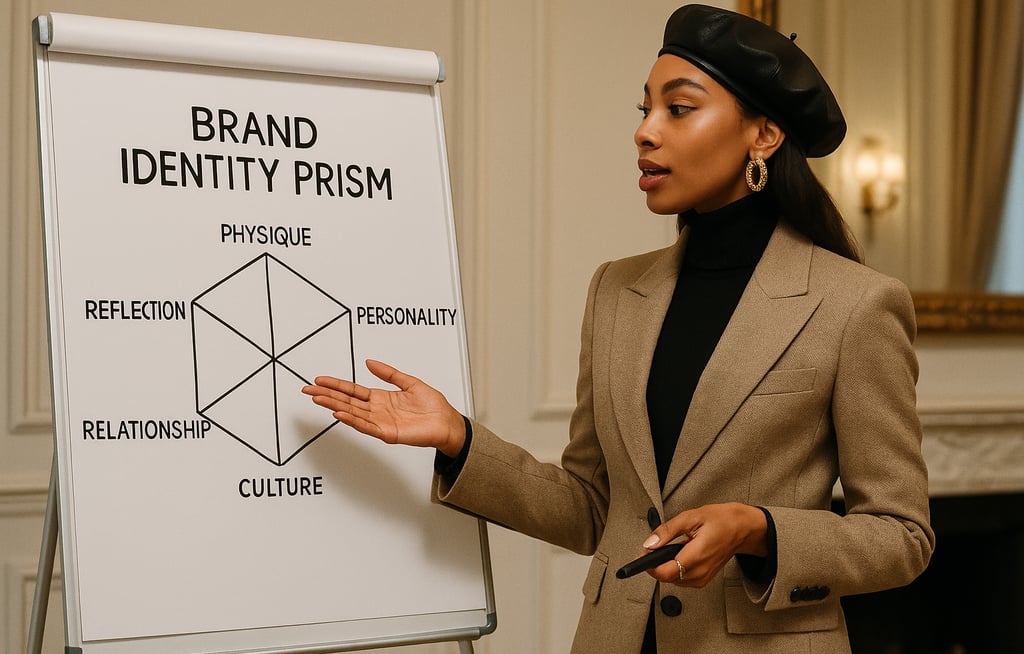

Credit: ChatGPT generated image
The concept of brand identity was introduced by J.N. Kapferer. According to Ianenko et al. (2020), brand identity could be differentiated into two phases, including (1) fitting into the concept of strategic marketing, investing in brand uniqueness, specifying the target market and positioning, and (2) developing the identity based on the finalized plan and how consumers react to the brand.
However, today we will be discussing Kapferer's Identity Prism. The Identity Prism model involves a six-category structure for affirming a brand’s image, and identity. The purpose of Identity Prism is to make a brand memorable together with distinguishable for its consumers and audience.
Identity Prism includes the following categories: (1) Physique, (2) Personality, (3) Culture, (4) Relationship, (5) Reflection, and (6) Self-image. These categories are divided into two dimensions:
The constructed source v/s the constructed receiver
Your brand should feel like a real person. Here, “Constructed source” is the physique and personality, and “Constructed receiver” is the reflection and image.
Externalisation v/s internalisation
Externalisation refers to external or visible contents of a brand, which include physique, relationship, and reflection. However, internalisation involves brand characteristics that include personality, culture, and self-image.
The Identity Prism Decoded
Physique: Tangible factors such as brand appearance, uniqueness, identification factor, product, and functionality.
Personality: Brand character, communication style (writing, designs, and color palettes), celebrity, or a person endorsing the brand.
Culture: Behavior and communication linked to the product and company environment, such as tying a brand’s culture to the country of origin or building a connection with consumers personally for belongingness.
Relationship: Service-oriented system where the company focuses on improving direct and experiential outcomes.
Reflection: Using people for advertisement that target customers could relate to in a broader sense.
Self-image: The Reason why people buy a product and what they want to present themselves as.
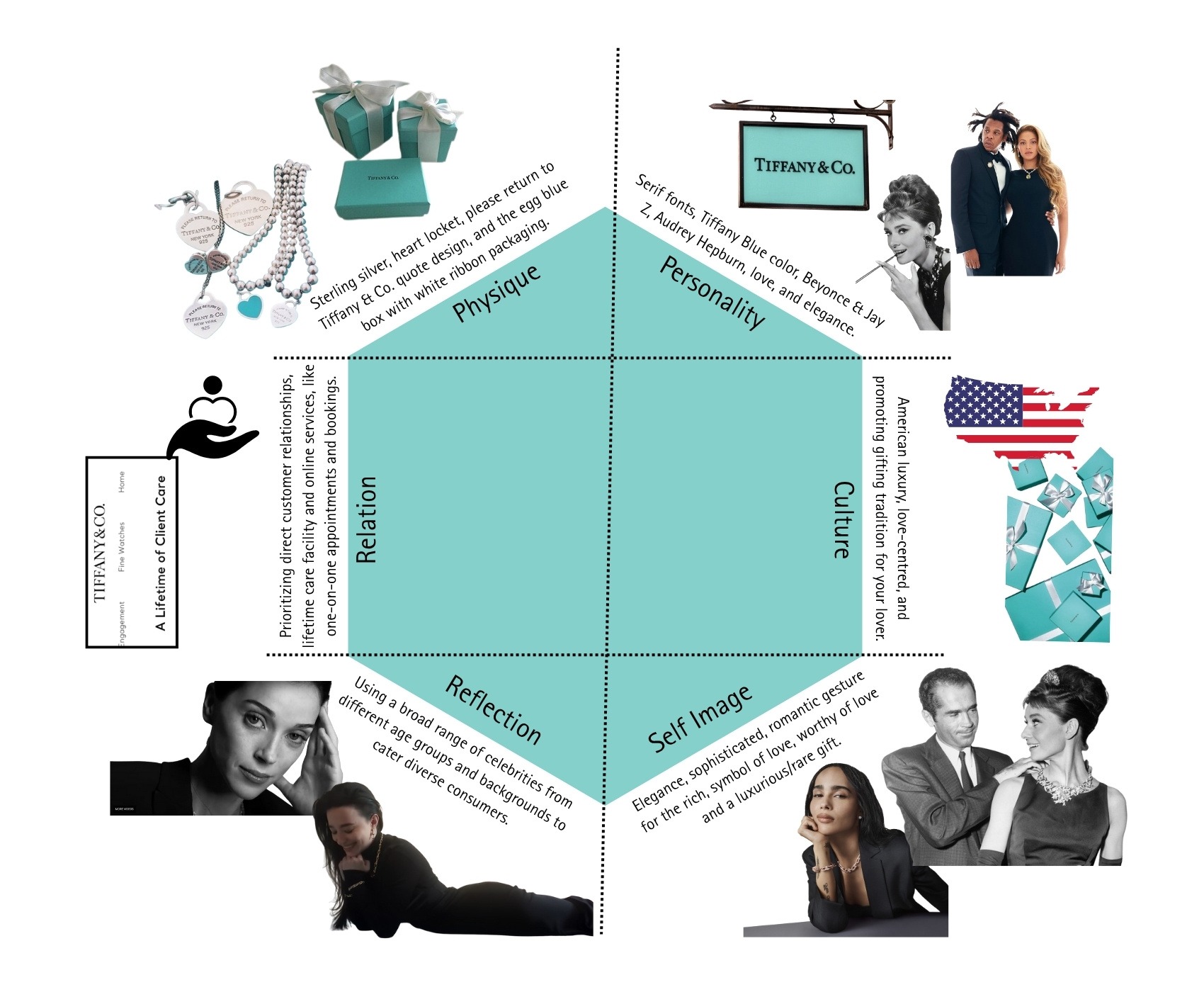
Real World Example: Tiffany & Co.
Tiffany is an American luxury brand, established on 18 September 1837 by Charles Lewis Tiffany. Its headquarters are situated in New York City. In 2018, Tiffany had 93 stores in the US and 321 stores worldwide. It deals in Jewelry, watches, personal accessories, leather goods, drinkware, fragrances, stationery, and more.
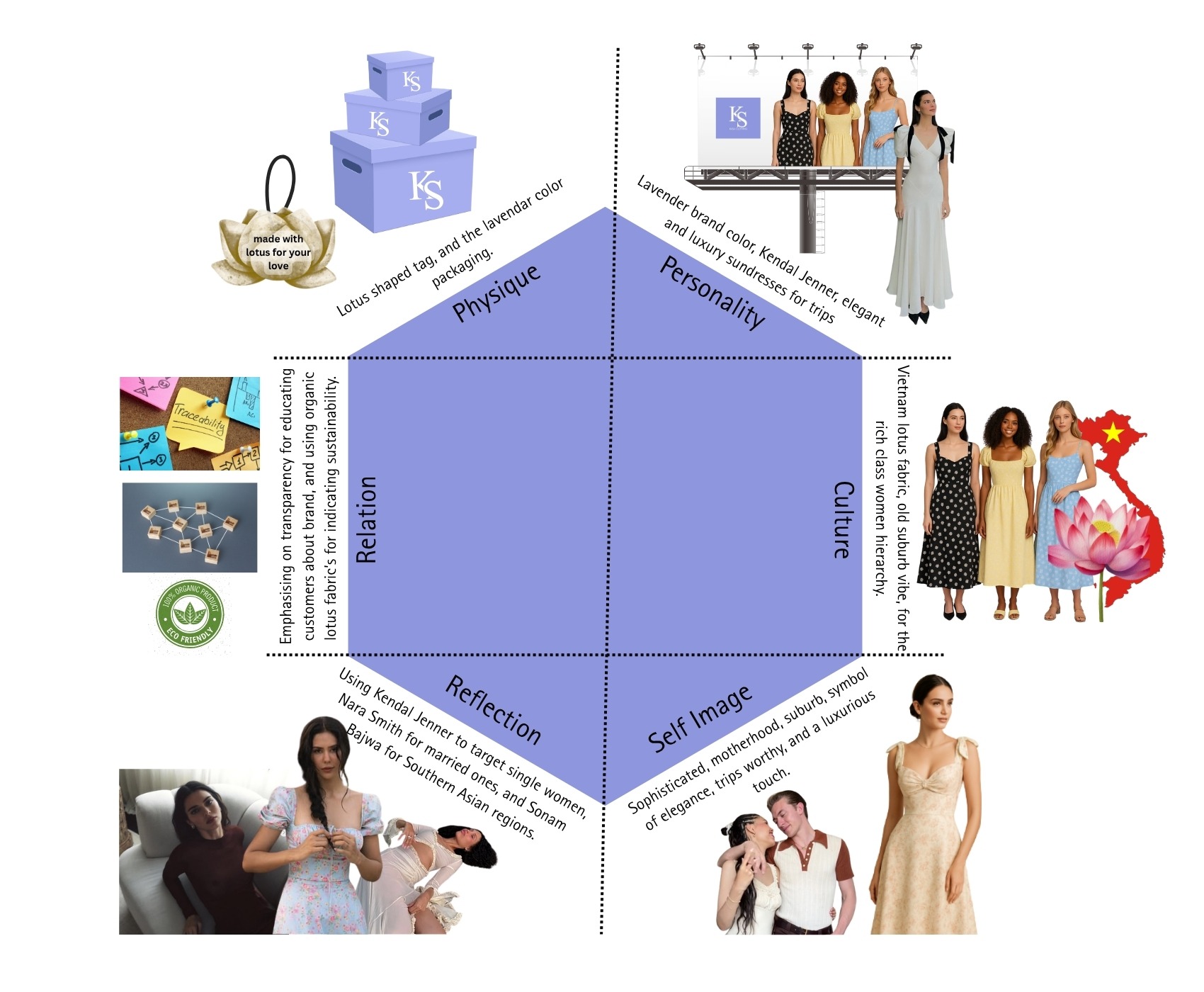
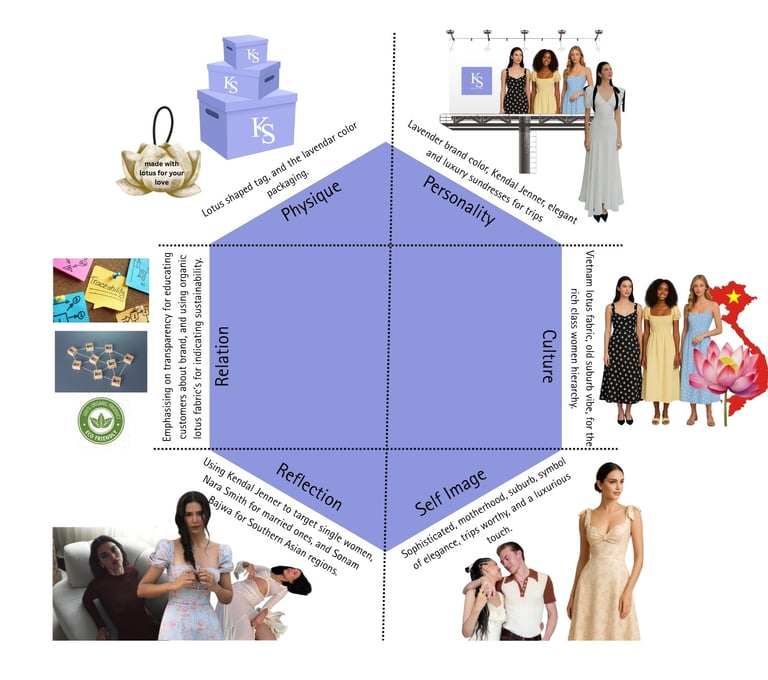
Implementing Identity Prism on a fashion brand: a Hypothetical Exercise
Brand Name: Kasa
Brand Niche: Premium summer wear for women
Brand Target: Market: 18 to 45 year old women
Brand Origin: Vietnam
Brand Speciality: 100% Organic Lotus Fabric Sundress
Credit: Author/Mankirat Kaur, Images source: Tiffany & Co., and Canva Images
References
Kapferer, J. N. (2009). Kapferer's Brand-Identity Prism Model. European Institute for Brand Management, 24, 2014.
Ianenko, M., Stepanov, M., & Mironova, L. (2020). Brand identity development. E3S web of conferences, 164, pp.09015. EDP Sciences.
Credit: Author/Mankirat Kaur, Images source: ChatGPT/AI; Kendal Jenner, Nara Smith, and Sonam Bajwa official Instagram account; and Canva Images