
Integrating Design Thinking in Fashion Design Product Development
INNOVATION IN FASHION
Mankirat Kaur
4/1/20253 min read
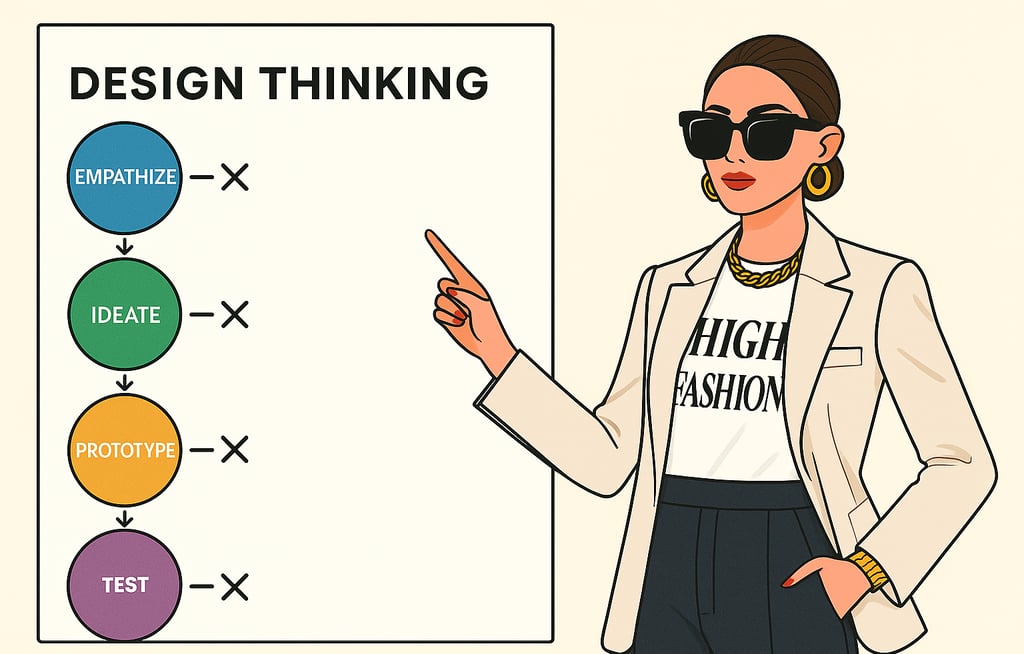
Credit: ChatGPT generated image
In traditional fashion design pedagogy, design development or collection development is often based on gathering inspiration, creating mood boards, developing a color palette, generating sketches, and finally constructing the design/collection in real life. It is often observed that certain design elements are repeated across multiple garments within a collection. This repetition is influenced by specific components established during the mood development phase. Many designers approach the design process in a non-linear manner. This is partly because the origin of a design concept can sometimes precede the formal steps of the process. For example, a designer who has already envisioned a Cheetah Print collection may have the color palette and mood board visuals already formed in their mind, even before officially starting the design development stages. The other lens is the strengths and perspectives of a designer; some people are good at designing garments on fabric, while some need to design through sketches and create patterns before sewing, and vice versa.
What is Design Thinking (DT)?
In simple term, Design Thinking is a problem-solving process to create advanced consumer-centric products, services, and experiences involving user empathy, feedback, and constant iterations. It has five phases:
1. Empathize: Taking care of user needs, wants, and desires
2. Define: Wording the problem in a loose way and concise later
3. Ideate: Exploring multiple ways to solve the problem and think out of the box
4. Prototype: Giving life to the idea and creating the practical version/model of the solution
5. Test: User based feedback to improve the end-product
Applying DT to Traditional Fashion Design Development (TFDD)
Here, the seven specific steps of traditional design development in the discipline of fashion are considered as: (1) Theme, Inspiration, and Concept Development, (2) Mood Board Creation, (3) Color Palette, (4) Design/Sketching and CAD, (5) Fabric and Material Research, (6) Prototype/Pattern/Toile Development, and (7) Garment Construction.
Integrating TFDD with DT for Generating Designs
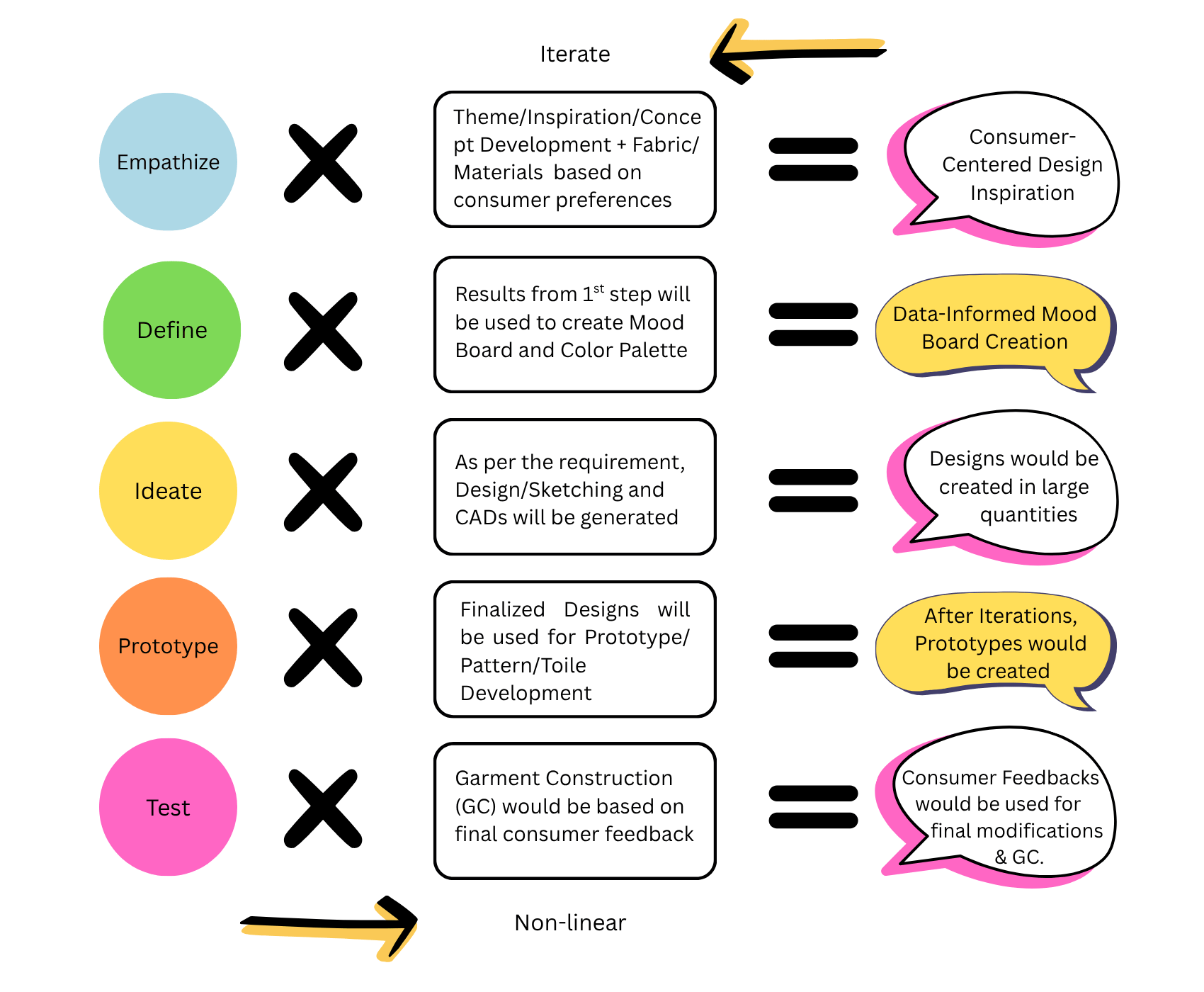
Empathize X Theme, Inspiration, and Concept Development + Materials Research: For the first step, empathy driven research would be used to draw both design inspiration and key theme leading to a consumer-centred design concept.
Define X Mood Board Creation + Color Palette: Secondly, the data collected during the first stage would assist to create a data-informed mood board.
Ideate X Design/Sketching and CAD: Further, inspiration, mood board, and color palette would be used to create a large quantity of designs.
Prototype X Prototype/Pattern/Toile Development: After the designs are ready (flatsketch, illustration or other formats ), working prototypes would be created.
Test X Garment Construction: At the end, Consumer feedback would be used to assist the final modifications and turn the designs for product/garment construction.
Design Thinking could be valuable for Haute Couture and Avant Garde garments involving a generous amount of iterations. Here my method sticks to the original DT technique following a non-linear approach for flexibility. The designers can work with either of the categories to create their final design outcome.
Additionally, ideate category aids the freedom to pour creativity and pushes us to think out of the box. Today, Design Thinking is a part of fashion industry unknowingly, however, it is important to discuss about the change it can bring in how we see design concepts and product making in the fashion industry as professionals.
Next in this series, I will talk about the the usage of Design Thinking in sustainable fashion backed with peer-reviewed scholarly articles, and accompanied by a new model outlining practical steps to integrate Design Thinking into sustainable apparel industry.
I will see you in the next one!
Until then keep loving slow and sustainable fashion ♡
Credit: Author/ Mankirat Kaur