Understanding Brand Stretching in Luxury Market
LUXURY FASHION INDUSTRY
Mankirat Kaur
3/1/20253 min read
Credit: Author/ Mankirat Kaur
This documentary ‘Riverblue’ is a fifty-two-minute long visual piece addressing the issues, situation and reality of modern fashion industries and their detrimental effects on our environment. International river conservationist, Mark Angelo marks a journey of unfolding the hidden cost of the products showcased and sold in big fashion stores. He emphasizes the importance of aquatic reservoirs by shifting the focus on the 1% of water that is drinkable and used by humans for almost every commercial purpose including agricultural and industrial uses.
Ever wondered why Chanel, a brand built on haute couture, became equally famous for its iconic Chanel No. 5? Or why today’s luxury houses are expanding into branded hotels and exclusive dining experiences? This phenomenon is called brand stretching, and it represents a radical shift from the traditional luxury model. For decades, the industry wore the flag of scarcity and rarity with pride, but modern brand stretching is a deliberate and daring strategy to expand a brand’s presence without appearing purely transactional. It is creative, visible, and represents the future of luxury.
What is Brand Stretching?
Brand stretching involves expanding a brand’s product categories without compromising its core image or essence. This strategy is increasingly adopted by luxury companies, many of which are moving beyond their specialized origins to offer a diverse range of items. The goal is to reach a broader audience while meticulously preserving the brand’s defining aspects, such as exclusivity and rarity. For instance, Louis Vuitton, originally a luggage and trunk maker, successfully stretched its brand to include a wide array of apparel.
Same Brand, Diverse Customer Needs
Demographics plays a core role in shaping consumer demands, with each group exhibiting distinct preferences. To cite an example, a primary school child from a wealthy family might not desire to own handbags, wallets, or business suits; however, high-end stationery like expensive pens and notebooks can be the ideal choice. This is precisely why brands like Montblanc cover many sectors, providing a range of products, including notebooks and pens. By doing so, they effectively attract and cater to varied customer segments within the same brand ecosystem. In today’s globalized market, where the world feels increasingly interconnected, a luxury brand that limits its offerings risks alienating a substantial base of potential customers seeking tailored products.
Brand Stretching of Montblanc
Source: Willianpenn.net
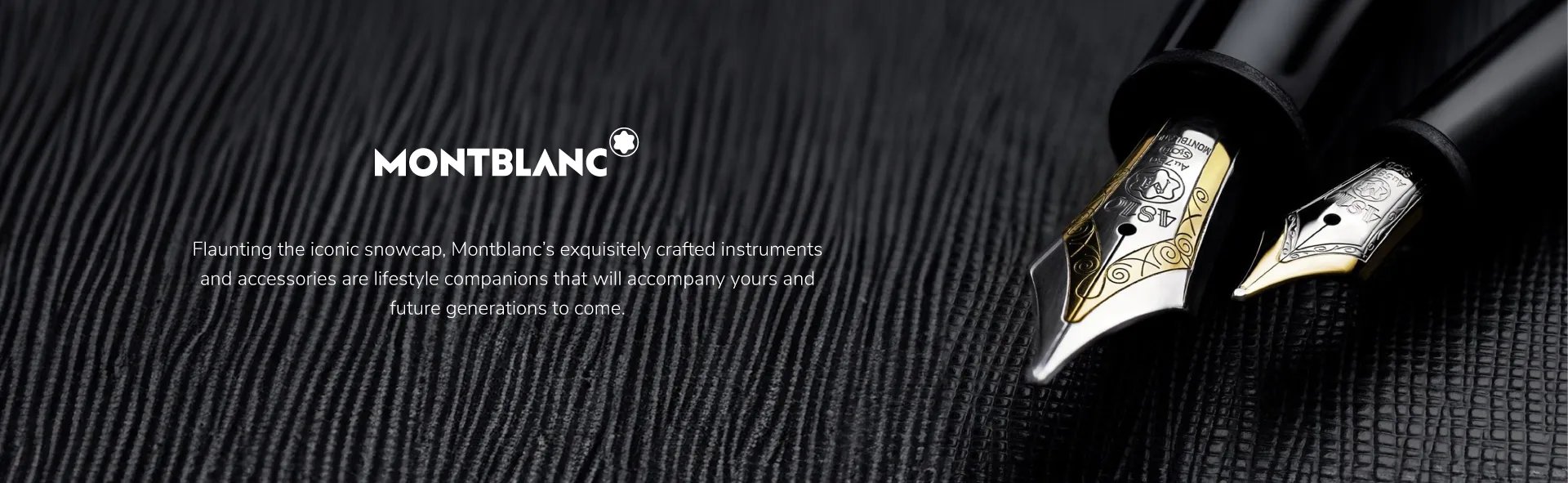
Initially, Montblanc started as a pen shop. It happened when, in the early 20th century, August Eberstein, a designer from Berlin, collaborated with a Hamburg banker, Alfred Nehemias, to develop a range of simple-to-use fountain pens. The motive of this range was to promote a simplistic and sophisticated range of built-in ink pens; however, just after a short time, their company was taken over by Wilhelm Dziambor, Christian Lausen, and Claus Johannes Voss, who together launched Montblanc.
1908: Montblanc coined the phrase/tagline, “manufacturers of high-class gold and fountain pens.”
1935: The company started producing branded leather pen pouches, notebooks, and writing cases.
1990s: Expanded the empire into the Asian market.
1996: Started manufacturing men’s jewelry.
1997: Launched Montblanc Montre S.A. in Le Locle, a Swiss district known for its link to the watch industry, and acquired a lot of fame in the watch industry.
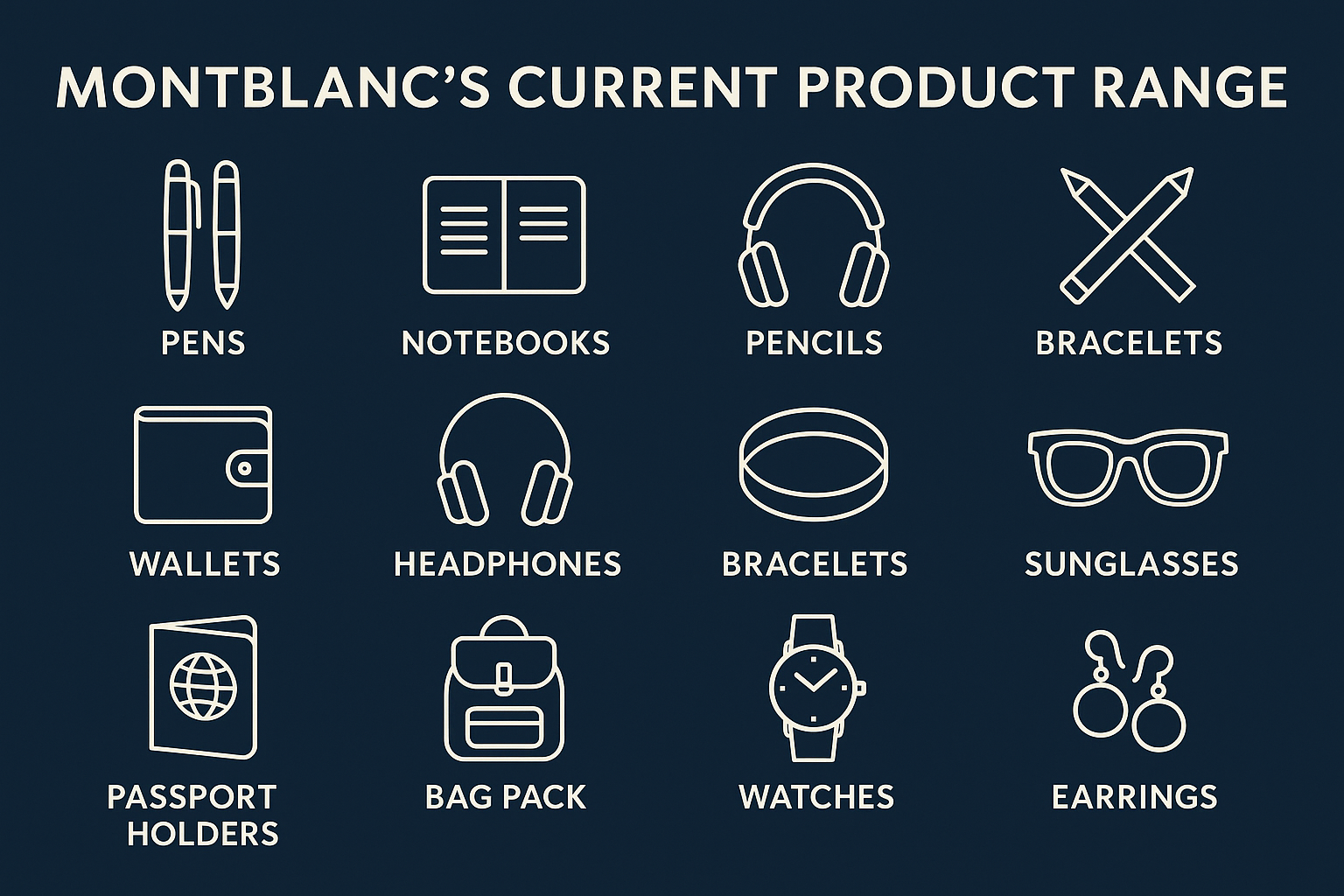
Credit: ChatGPT generated image
At present, Montblanc has a huge range of products that started from the luxury and fine pen industry, stretching into products like wallets, accessories, notebooks, pencils, backpacks, bracelets, etc.
References
The Pen Shop UK. (2021). The history of Montblanc. https://www.penshop.co.uk/blog/the-history-of-mont-blan